Keyboard Ear Training - Play now

Keyboard Ear Training
Feedback Message

Keyboard Ear Training

Find the mystery note relative to Middle C!

Ear Training

0/0 (0%)

06 December 2019

NEW ABRSM Exam Booking

Have you ever found the examiners handwriting impossible to read, wanted to choose your exam day or check results as a student. Well now you can, with the ABRSM's new online booking system.

Starting from January 2020, all UK exam entries will need to be made using the ABRSM's new online service, with which results will be available more quickly, along with digital mark forms. And with their new candidate account option, candidates or parents will be able to log in to check exam information, change practical appointments and view their results and practical mark forms. 

However, to be ready for this new format, there will be some changes in the application process. First of all, those booking the exam will need to set up a new account, even if you already had an old applicant ID and you can register for this HERE

Also, when adding candidates, the date of birth will now be compulsory and if you want to see your results as a candidate, you will need to give the applicant an email address to log in to the online service. Teachers will need to be sure they comply with GDPR rules about the storing of personal data.

When applying, the applicant will now have the option of choosing the date, but to ensure the widest possible choice of options, this should be done right at the start of the booking period. So for example, the booking period for next term is 13 – 26 January. Probably many teachers in the past, will have left it until the last possible day, so this might necessitate a change in habits.

Certificates will still be issued by post as before, but the mark forms will be in an online pdf format, which addresses the old problem of being able to read the examiner's handwriting, although I can envisage it might make the exam process take a little longer if the examiner's typing skills are not so fast. 

One final change to the exam process itself, is that examiners will now be using ipads to not only make a written record of their marks and comments, but also an audio recording of the exam which can be used the the event of an appeal, which seems to me a good step forward.

03 December 2019

Textual description of firstImageUrl

🔴 LIVE Grade 4 ABRSM Piano - Mock Exam


This video is a LIVE mock - Grade 4 Exam given to one of my Skype Students with no editing out mistakes or retakes, in order to mirror the experience of a real exam. 

To get YOUR MusicOnline UK Grade assessment click HERE

To get YOUR MusicOnline UK Grade assessment click HERE


Scales
All were played accurately with even rhythm and tone even if the tempo was a touch under the recommended for this Grade
20/21

A Kwela for Caitlin
A generally accurate performance that conveyed the lively character of this piece although there was a little upset in the rhythm and some piano dynamics could have been more contrasted
24/30

Reef
A very dramatic opening captured the character of the storm from the outset. As with the previous piece, the contrasting piano dynamic could have been explored a little more as could the marked changes of tempo in the final couple of lines. There were also minor note errors towards the end
26/30

Sonatina in A minor
Some effective and creative uses of dynamics and some nice shaping to this performance. The tempo was a little cautious for an Allegro but notes and rhythm were generally accurate.
26/30

Aural
There were small errors in all parts except c(i) although responses were confident and showed musical awareness so that strengths outweighed weaknesses
14/18

Sight Reading
A very fluent, even if rather slow performance, with largely   accurate notes and a realization of some musical detail
17/21

TOTAL
127/150

17 November 2019

How to Improve YOUR Sight Reading OVERNIGHT

Change The Way YOU Sight Read


Most students focus primarily on getting the notes the correct pitch at the expense of keeping the beat going. However, if you look at the ABRSM marking criteria for a sight reading test, the FIRST thing that is mentioned for a distinction is, “Fluent, rhythmically accurate” (followed by “accurate notes/pitch/key”).

Sight Reading Trainer will help change the way you sight read. It is not just a series of specimen sight reading tests like you can buy in the ABRSM Specimen Sight Reading Grade Books. The examples in this book are designed to be played with an accompanying audio track which can be downloaded for free HERE 

This will improve your rhythm and fluency when sight reading. 


Another hindrance to effective sight reading is poor “Piano Geography”. This is the ability to feel your way around the piano without looking at your hands. Be honest - when you sight read, are you continually looking at your hands? It’s something I call, "watching vertical tennis", where your eyes travel up and down between hand and book for virtually every note or chord. No wonder your sight reading is hesitant and lacking fluency.

With this in mind, throughout the course there are some “Piano Geography” tests which MUST BE PLAYED WITHOUT LOOKING AT YOUR HANDS.

The third factor that will contribute to better sight reading is visualizing the music in your head (especially rhythm) before you even play a note and this includes how to use your preparation time effectively.

In an ABRSM exam for example, you are given 30 seconds to prepare. How you use this 30 seconds, is key to effective sight reading. 


DON'T just start playing from the beginning. Rather, the first thing you should do is get a sense of the key you are in and if you are taking an early Grade (1-2), simply find the hand position for each hand before playing a note. Throughout this course you will also find some “Instant Hand Position or Key Signature Recognition” tests.

Then, concentrating on the rhythm, try and visualize in your head how the music should sound, again before you even play a note. This will also include other stylistic markings such as dynamics and articulation. Getting the right pitch is only a small part of what the examiner is looking for. Below each test in this course, there will be hints of details to look out for, before you even play a note.

The last thing mentioned in the marking criteria for a distinction is “Confident presentation”. A sight reading test is an assessment on how well you can convey the music as a whole performance, NOT if you can recognise the pitches A, B, C etc - that is a theory exam!!

Finally - a word on mistakes. If you do miss a note, DON’T go back and correct it, you’ll only upset the flow and rhythm of the music and this effectively then counts as a 2nd mistake. You can’t erase the first mistake, and the examiner is not interested if you can improve on your wrong note, he wants to hear a performance of the music as a whole, which conveys as best you can, the character of the piece.


Now isn't it time you stopped leaving this vital skill to chance and actually did something to improve your sight reading.


12 November 2019

Textual description of firstImageUrl

This is what makes it all worth it!!

Running a YouTube channel and this website, can at times be a little solitary, but there come now and again appreciative comments that remind me why I do what I do. I while ago a grade 8 student sent me a Grade 8 piece, Debussy's "Voiles", for appraisal for which I made the following video


Then just this morning, a month later and after the student got his result, I received the following comment from him,

 "Thank you very much for providing me with such an insightful appraisal of my performance. I took your suggestions onboard and polished my piece and managed to get 29/30 in the exam. I sincerely wish more students will be able to access to the high quality content of your channel and become better musicians. Many thanks once again!"

... and on that note, if you too would like an appraisal, or one to one skype support click HERE 

10 November 2019

Textual description of firstImageUrl

Major Keys to Four Sharps or Flats


Workbook (NEW for 2021) with answers HERE

Or download a printable worksheet with answers
as a member of MusicOnline UK
for this lesson HERE

In Grade 2 you were expected to know up to 3 sharps or flats, so in this grade there is not that much more to learn. At this stage it might be helpful to look at all the keys you should know in a table.


Key             Key Signature
E major       F, C, G, D
A major 
     F, C, G
D major 
     F, C
G major   
   F
C major       No sharps or flats
F major 
      B
B major 
    B, E
E major   
   B, E, A
A major 
    B, E, A, D

Can you see a pattern here?

  • Each key loses a sharp (or adds a flat as you go down the list)
  • The order of the sharps / flats is the same and this is the order that they should be written in a key signature as in the example of an E major key signature in the treble clef below.
  • Notice also that there is an interval of a 5th between each of the keys, and between each of the sharps or flats. This is known as the cycle of 5ths, (because as you learn a few more keys they will go round in a "circle" and start back at the beginning.
For example there is an interval of a 5th up to G major, another 5th up to D major, another 5th up to A major etc etc

Then looking at the flats from D to A is a 5th, likewise A to E and so on. The same is true with the sharps, from F to C is a 5th, as is C to G - G to D etc etc. So as long as you can count to five you can work out any key signature.

Practice this topic with our workbook
"Music Theory Practice - A Complete Course"
New for 2021 


09 November 2019

MusicOnline UK Guide to Music Theory

The MusicOnline UK Guide to Music Theory - is an invaluable resource for those taking a Grade Music Theory Exam, Grades 1-5, at both ABRSM and Trinity College.

This e-book contains gives a detailed explanation of each topic, in a handy digital reference form and contains the same material as our paperback, “Music Theory Practice - A Complete Course”, but without the question and answer worksheets.

Many of you might already be aware of the AB Guide to Music Theory, but this book, independently published gives you all you need to know, right on your mobile device, (smartphone, tablet or Kindle reader) where you can access it offline at any time. (Oh and by the way - as you would expect from an e-book, it is cheaper than the aforementioned paperback)
As a music teacher of over 35 years of experience, I have never had a student fail a theory exam. Through my own understanding of what works best for students and how some of the alternative material on the market can sometimes be a very tedious method of learning and I am confident that you will find this ebook an invaluable resource.


15 October 2019

Textual description of firstImageUrl

How many marks would a lose for a few wrong notes - Example Musette in D Grade 2 Piano

Have you ever come out of an exam after messing up a few notes and then stressed out thinking “I’ve failed” ?


Before I go into how many marks one might lose for playing a few wrong notes, I want you to listen to this performance of a Musette in D for Grade 2, bravely sent to me for Appraisal, by Dennis, one of my subscribers - which does contain a few slips - and have a guess how many marks you think it is worth.


We always seem to concentrate on the negative when we come out of exams and seem to forget that the examiner is marking based on 5 criteria, Pitch, Time, Tone, Shape and Performance. You go into the exam with 20 marks before you have even played a note and then can gain a possible two extra marks in each of these categories thus giving a potential full mark of 30.


So if you make a few slips, but generally you have correct notes you would only lose 2 marks.

If you listen again to the performance you just heard notice this time how commendably Dennis kept the rhythm and tempo going despite the mistakes, how there was dynamic shaping and the dance like character of this piece was conveyed, giving an overall mark of probably around 25 marks out of 30 a MERIT

So if you make a mistake in an exam - don’t panic. Try to keep the rhythm going and concentrate on the other musical factors that give a piece its character and by the way if you too would like an appraisal of your own performance click the card on the left or to watch more appraisals - click the card HERE


27 September 2019

Textual description of firstImageUrl

Music Theory Practice - A Complete Course

Music Theory Practice - A Complete Course

 An invaluable resource for those taking a Music Theory Exam at both ABRSM and Trinity College, Grades 1 to 5. 


Music Theory Practice - A Complete Course is an invaluable resource for those taking a Music Theory Exam at both ABRSM and Trinity College, Grade 1 to 5.
Music Theory Practice A Complete Course


This book (also available as 5 separate books for each grade level if you do not need to start from absolute basics), contains not only a detailed explanation of each topic, but practice questions complete with answers for you to test your understanding. As a music teacher of over 35 years of experience, I have never had a student fail a theory exam. 

Through my own understanding of what works best for students and how some of the alternative material on the market can sometimes be a very tedious method of learning, I have developed this course as a compliment to my video series on YouTube and I am confident that you will find success in your exam by going through this course. So are you ready to get started on your road to Music Theory understanding.....


Topics covered:


Lesson 1.1 Time Values, Bar Lines and Time Signatures
Lesson 1.2 Notes on the Stave
Lesson 1.3 Treble and Bass Clefs
Lesson 1.4 Beaming Notes
Lesson 1.5 Rests
Lesson 1.6 Tied Notes
Lesson 1.7 Dotted Notes
Lesson 1.8 Accidentals
Lesson 1.9 Major Scales
Lesson 1.10 Degrees of the Scale and Intervals
Lesson 1.11 The Tonic Triad
Lesson 1.12 Basic Terms and Signs

Lesson 2.1 Ledger Lines
Lesson 2.2 More Time Signatures
Lesson 2.3 More Major Keys
Lesson 2.4 Triplets
Lesson 2.5 Minor Keys
Lesson 2.6 Grouping of Notes
Lesson 2.7 Grouping of Rests
Lesson 2.8  Grade 2 Musical Terms and Signs

Lesson 3.1 Demisemiquavers
Lesson 3.2 Major Keys to 4 sharps or flats
Lesson 3.3 More than two ledger lines
Lesson 3.4 Transposition
Lesson 3.5 Compound Time
Lesson 3.6 Minor Keys to 4 sharps or flats
Lesson 3.7 Intervals - Major, Minor and Perfect
Lesson 3.8 Grade 3 Musical Terms

Lesson 4.1 Time Signatures - REVIEW
Lesson 4.2 Breves and Double Dotting
Lesson 4.3 Duplets
Lesson 4.4 Alto Clef
Lesson 4.5 Double Sharps and Double Flats
Lesson 4.6 Keys to 5 Sharps or Flats
Lesson 4.7 Technical names for Degrees of the Scale
Lesson 4.8 Writing Chromatic Scales
Lesson 4.9 Intervals (Augmented and Diminished)
Lesson 4.10 Writing and Recognizing Chords
Lesson 4.11 Ornaments
Lesson 4.12 Orchestral Instruments
Lesson 4.13 Grade 4 Musical Terms (Italian and French)

Lesson 5.1 Irregular Time Signatures
Lesson 5.2 - Tenor Clef
Lesson 5.3 - Transposition
Lesson 5.4 - The Cycle of Fifths
Lesson 5.5 - Irregular Time Divisions
Lesson 5.6 - Intervals Greater than an Octave
Lesson 5.7 - Naming Chords
Lesson 5.8 - Chords at Cadence Points
Lesson 5.9 - Grade 5 Musical Terms (Italian and German)


Also available as separate grades


21 September 2019

Textual description of firstImageUrl

How ABRSM Exam Pieces are marked - An Example Debussy Voiles for Grade 8 Piano.

This video below will use a performance of Debussy’s Voiles for Grade 8 Piano to demonstrate how the ABRSM marking scheme works for pieces, performed by a student Bernadino.


Before you even play a note in an ABRSM exam, you have the baseline 20 pass mark and then you can add or subtract marks to bring your total up to the maximum of 30 marks, or down to the minimum of 10 marks. By the way, you can only get zero if you don’t play a note. Theoretically you can get 10 marks for just playing the first note and then stopping. 

That leaves a margin of 10 marks either side of the pass mark and interestingly there are five categories which the examiner uses to assess you: Pitch; Time; Tone; Shape; Performance. Logically it follows that there are two marks to be gained or lost either side of the pass mark for each of these categories. And if you look at the official marking criteria on the ABRSM website, there are two descriptions of various levels above the pass mark for each of these categories.

Lets take “Performance” for example. For the performance you just heard, I would suggest that it fits the description, “Assured, Fully committed, Vivid communication of character and style” and so the basic pass mark is brought up to 22

Regarding pitch, again the description , “Highly accurate notes” would gain another 2 marks bringing the total up to 24

Regarding “Time” Debussy’s marking is "In a rhythm without strictness" and at times there could have been room for a little more rubato and less metronomic playing. So in this case  an extra credit of one mark brings the total up to 25.

Again, in the area of tonal control this performance generally achieved a good balance between the hands, bringing out the melody where appropriate, but just now and again it all got a little muddy. So like the previous category only one credit mark would be gained bring the total to 26.

Finally, we turn our attention to the category “shape” which refers largely to the use of dynamics. In general this performance involved a wide range of effectively used dynamics, however, there were moments when maybe it was just a little too loud for the ethereal quality of this piece, so again, just one extra mark, bringing the final total to 27 marks out of 30.

17 August 2019

Textual description of firstImageUrl

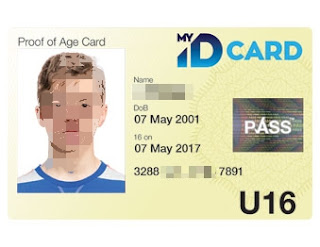
New Photo ID Requirement for UK Exams

According to a recent notification sent out to teachers in the UK, the ABRSM are introducing a new "Candidate Identification Policy" from January 2020. 

This will be required for those taking many of the higher level exams i.e:
Practical Exams - Grades 6-8
Jazz exams - Grade 5
Theory Exams Grades 5-8
ARSM diploma
 I assume the thinking behind this is to combat cheating. It is possible, for example to get someone else to do an exam for you, although the value of this seems to be illogical. Maybe the reason for using it in just the higher grades is that they are used for UCAS points for university entry and some less scrupulous students might try to cheat the system that way. 

By the way, the unusual inclusion of the Grade 5 Jazz exam would seem to be that it is an alternative to Grade 5 Theory as a prerequisite to doing Grades 6-8 Practical.

So, because of the unethical actions of a very small minority, there will an extra burden placed on the vast majority, not only with an extra layer of red tape, but also financially. 

From my own teaching experience, the majority of my students are under 18 and many do not have any form of photo ID. There will be many of course with passports, but that seems to discriminate against those who don't. There are optional ID cards available such as from validate.co.uk, but this service costs an extra £15 on top of the already expensive exam fees.

Additionally, this process is not as easy as it sounds as they require two documents, one of which should  confirm your name and address, ie utility bill/bank statement/government issued letter such as HMRC or DWP/NHS letter. 
How many 12 year olds have a gas bill or tax letter in their name???
From my research, I note that this requirement is already in place in a few countries that offer ABRSM exams, such as Hong Kong and Malaysia, but there, minors already need to carry some form of photo id from the age of 12. 

At this moment in time, the exact form of ID has not been specified by the ABRSM and they will be publishing more details later in the year. Rest assured that I will keep you up to date on any developments and so that you don't miss the news you can subscribe to future posts on this blog with the form below


So what your your thoughts on this new requirement? An unnecessary layer of bureaucracy or a necessary step to stop a minority of those who would cheat the system? Please leave a comment below.


26 July 2019

Textual description of firstImageUrl

Allegro Moderato - Schubert - Grade 8 ABRSM Piano B3 - MusicOnline UK Teaching Notes

Sonata in E - D. 459 -1st movement - Allegro Moderato

Franz Schubert

Grade 8 Piano 
ABRSM 2019/2020 B3 / AMEB  Series 17  B4


Teaching Notes

One of the first things to notice is the tempo marking - Allegro Moderato. There are many performances available on YouTube for example which seem to miss the second word in this direction. There needs to be enough space to explore Schubert's beautiful melodies which is not possible at a "break-neck" speed.

He is also very specific and detailed in his notation of dynamics and articulation. Every marking is there for a purpose so take time to understand why each is there.

The following are some details that might easily be missed:
Bars 2, 4, 6 etc - Observe the crotchet rest in the LH.

Bars 7 - Lift the last note of each triplet group.

In general, it would be correct to pedal much of this movement, but be careful to not blur harmonies, for example bar 6 would need a change of pedal every beat.

The section starting at bar 21 uses many "four note slurs" which need separation one from another, so if you are using pedal here, make sure it releases on the last note of each slurred group.

When the alberti bass semiquavers start at bar 33, always keep them as light as possible, never obscuring the RH melody.

For the big cadence in bars 43 & 47, although the general dynamic is quite loud, be sure to lean more on the first chord and slightly lighten the second chord.

In the development section (bar 54 onwards), keep the repeated notes as soft as possible. If the melody is marked pp then this accompaniment should be ppp.

At bar 62, although there are block ff chords, try to bring out the melody by leaning on the 1st, 3rd and 4th beats.

Another "hidden" melody to bring out is the rising middle parts in bars 72-77, alternating between LH and RH.

Much of what has been mentioned above applies to the recapitulation from bar 80, the music being basically a repeat of the opening "exposition" but in different keys.

14 June 2019

Textual description of firstImageUrl

ABRSM Piano 2019/20 Grade 8 A2 - MusicOnline UK Teaching Notes

Sonata in D - Kp 214

Domenico Scarlatti

Grade 8 Piano ABRSM 2019/2020 A2


Teaching Notes

One of the first things you may notice with this piece, is that (at least in the ABRSM edition), there are no dynamic markings. However, the examiner will be looking out for your creativity by adding some dynamics to your performance. The music itself, suggests quite obviously at times, where these should be. Bars 4 and 5 for example are an exact repeat of bars 2 and 3 and so an "echo effect" here would be stylish. Be careful however, that the phrases in this piece often start on the third quaver of the beat and so your changes in dynamics should reflect this. If you need inspiration, listen to the above performance and pencil in your copy any dynamic changes you hear. These are open to interpretation, so also feel free to experiment, noting that changes from this period of music tend to be "stepped" or "terraced", i.e. sudden not gradual.

The next thing to consider is the articulation. Very few "slur markings" are to be found. Indeed, even the ones shown in the ABRSM edition are editorial suggestions only and the performance above on occasions varies from these. In general a note that is a discord on the beat that then resolves in the 3rd quaver of that beat, should be slurred onto that 3rd quaver. For example, those slurs marked in bars 6-9. However, later on there are similarly printed slurs that are not  resolved discords (e.g. bars 37-40) and you will notice that the above performance omits these slurs in general. In order to give a forward momentum and dance like feel, you will notice, that apart from those discords just mentioned - there is a slur of the first two quavers of the beat with the 3rd quaver separated from its adjacent notes. Again, this is not gospel - the above video is just one interpretation and your inner creativity may feel it differently.

Regarding the ornaments, at speed the suggested triplet works well, but make sure that this is  on  the beat, not before and also that they flow without hesitation onto the next note. Some slow metronome practice in the sections where both hands play ornaments together (e.g. bars 6-9), may be beneficial.

Finally, you may have noticed in the above performance, some re-assignment of the hands to what is written in the ABRSM edition. The slurred resolution of discords mentioned earlier are written one note in each hand. This works fine for the first one in bar 6, but becomes slightly clumsy and awkward for the next two in bar 7 where it is suggested to slide your thumb from one note to the next. Far easier and equally acceptable would be to take both these notes in the RH in each case.

Aternative fingering to ABRSM edition

09 June 2019

Textual description of firstImageUrl

Pot calling the kettle black.

Alan Chan YouTube Channel plagiarizes other users content

So, a little aside from my usual type of post, today excuse me for ranting a little about a certain channel which has become nothing less than a nuisance to serious music students on YouTube.

A little while ago, you may remember a copyright dispute that I had with Alan Chan, (without going into detail here you find out more HERE)

Anyway, moving on....

I recently came across another of 
Alan Chan's videos, 
ABRSM Violin 2020-2023 Grade 7 C1 Bridge Moto Perpetuo Three Dances H.4 No.3 Sheet Music
...which I found surprisingly well played. I say surprisingly, because it was way beyond his standard of violin playing.

Then I dug a little further to find that he had simply copied the audio from someone else's video and added sheet music. 


Have a listen to these two examples and let me know if you think they are one and the same audio.

Alan Chan's Video

Duo Deconet's Video (NOW DELETED)


Having contacted the original channel "Duo Deconet", their reply was as follows,


Hi , Duo Deconet has not authorized any download of our videos to anyone. Alan Chan does not have permission or any concession to use our audios in his websites. This has been reported to head office. Duo Deconet is based in the Hills District in Sydney too... He would need to delete his video if he wants to keep his account open and learn how to play it himself.
The crazy thing about this is that Alan Chan, himself tried to make a Copyright claim against myself, even though the source that I used in the alleged claim was marked at the time "Creative Commons - Re-use allowed"

MORE PLAGIARIZED CONTENT
https://www.youtube.com/watch?v=FKftLpQbeCo
copied from https://www.youtube.com/watch?v=zRMaNgxEwxE

https://www.youtube.com/watch?v=-SY0yDFKCpw
copied from https://www.youtube.com/watch?v=sZ7bm9DlEbY

OK - rant over. Thanks for taking the time to read and let's concentrate on producing quality content in the hope that it eventually will overcome the mass produced, sub-standard monopoly that currently is offered to music students on YouTube.


UPDATE: Alan Chan's first video has been removed since this post was originally written. 

If you spot any other plagiarized content, let's clean up the platform and leave a comment below and we'll investigate. 


23 May 2019

Textual description of firstImageUrl

ABRSM Piano 2019/20 Grade 5 C1 - MusicOnline UK Teaching Notes

Rektor

Witold Lutoslawski

Grade 5 Piano ABRSM 2019/2020 C1


Teaching Notes

The best place to start learning this piece is the final vivace. This brilliant finish will need extra practice, so if you start learning this first you can confident of secure finish, rather than leaving the hardest part to the end, thus giving it the least practice.

As you work through the piece, pay careful attention to the exact dynamics and articulation. Often the dynamics are sudden changes for just one bar (bars 16-18) and other times involve a very quick crescendo (bar 24). Making good contrasts will give this piece character and earn you credit in the exam. Regarding the articulation, apart from the fact that very often a staccato in one hand is against a longer note in the other hand, make sure the tenuto notes are long, but NOT legato.Also notice that a lot of these tenuto notes have accents on them, a characteristic of this piece where the emphasis is frequently on the 2nd beat rather than the first.

In the meno mosso section, note the staccato dots under a slur in the RH. These should be "semi-staccato", separated, but note too short. The LH could afford a legato line here, but for a perfect legato, you'll need a different fingering to the one in the book (see video above). Also this section could benefit from an extra ritardando (not printed ) up to the pause. Then notice the little comma after the pause before the Tempo I. There should be a brief moment of silence here, a breath if you like.

Overall, the strictness and accuracy of the details mentioned above should convey that discipline and attention to detail expected by the inspiration for this piece, a stern old style schoolmaster who demands nothing but perfection. 

22 May 2019

Textual description of firstImageUrl

ABRSM Piano 2019/20 Grade 8 C5 - MusicOnline UK Teaching Notes

Elégie

Serge Rachmaninoff

Grade 8 Piano ABRSM 2019/2020 C5


The above video and following teaching notes are done in collaboration with Nourskean1039 (Check out their channel HERE)

Teaching Notes

First I think it is very important to  be conscious  that Rachmaninov is not Chopin, so not to be played in the style of Chopin. 

The 3 first bars have a different signification each one. 
  • The first bar is to introduce the piece. 
  • The second bar is to confirm the first, like an " echo".. so a little less louder. 
  • The 3rd bar is for preparing the first note in the right hand.. so the melody line opens at the end ..
One has to be aware that the dramatic character in the left hand is not necessarily expressed by a slow tempo, but through the way one conveys the score as it is written, by making the melody in the left hand swell and unswell . The left hand has to be most " legato" possible

At 1:58, the melody in the left hand has to be heard clearly, as well as the melody in the middle section in the right hand at 4:11 

And do not forget to prepare the last bars !

Finally I would say that the pedal work has to breathe in harmony with the interpretation..

Additional Notes by MusicOnline UK
You'll need a lot of lateral freedom, which will be aided by  good feeling for the geography of the keyboard using 2nd and 3rd fingers as pivots as you travel from left to right and back again. 

Being aware of the different layers and voicing the tune is essential for a musical performance such as the opening RH melody and that of the LH in the piu vivo section.

In the appassionato climax of bars 70-82, there are actually 3 layers, leading with the RH melody, then the "bell like" lower octaves in the LH and finally the supporting quaver chords. Note they are supporting - not overpowering.

Note also that the full dynamic range is used in this piece, from ppp - fff.


19 May 2019

Textual description of firstImageUrl

Happy Day - Grade 1 ABRSM Piano - Student Appraisal

The video below is a Student Appraisal of "Happy Day" for Grade 1 ABRSM Piano, by Dennis, one of the members of our MusicOnline UK community. But before I give my comments, have a listen and see how many marks out of 30 YOU think it is worth.


Appraisal


You set off at a lively tempo (perhaps a shade faster than the suggested metronome mark) but all the, you captured the “Happy” mood of this piece and swing rhythms were well controlled.


There was an effective use of dynamics which gave a nice contrast on the 3rd line, but here, try to make the difference between the LH crotchets that have no staccato marking and those that do. For example, the first chord of bars 9, 10 and 11 should release exactly on the 2nd beat, but the last chord in each case could have a slightly more bouncy staccato.

There was a slight rhythmic inaccuracy in bars 11 and 12. The last RH note (tied A) needs to start before the beat (you played it on the beat) and then the LH comes in on the exact beginning of the next bar (12) - you made it a quaver coming in half way through the 1st beat.

On the 4th line the similar chords from the 3rd line suddenly became much longer, almost a full three beats, maybe because this section is louder, so effectively you lost the LH rests on this line completely.


Finally a well observed long middle G in the last bar, maybe you could afford to slow down a little more.
Expected mark for this performance 26 marks.


GET YOUR OWN APPRAISAL HERE

10 May 2019

Textual description of firstImageUrl

ABRSM Piano 2019/20 Grade 4 C3 - MusicOnline UK Teaching Notes

Rytmická

Luboš Sluka

Grade 4 Piano ABRSM 2019/2020 C3


The composer's marking of Scintillante (sparkling) gives us an idea of the character of this piece and how it should be performed. It needs a fairly fast tempo (unlike that of most of the popular examples on Youtube). Also, to give this piece "sparkle", one needs to keep the repeated chords of the LH very light against  an often much louder RH.

If you notice the footnote in the ABRSM edition, it says that there are no dynamics in the original and those printed are editorial suggestions only. That means, you are free to add your own creativity. If you notice in the above video performance, there is some variation from the printed suggestions. For example the echo effects of the last two lines. The emanier will reward stylistic creativity.

Observe articulation markings strictly. There should be a distinct contrast between notes marked staccato and those marked legato and watch out also, for the long held notes in the lower RH below the staccato upper notes - e.g. bars 4 and 5. Also note the long B minim in the LH of bar 17.

One area that is likely to catch many out is bar 12. The quaver - 2 semiquavers rhythm would be quite tempting to slur all three notes, but notice the staccato on the first quaver.


Finally, there should be no ritardando at the end and in the video performance above, note the dramatic fortissimo after a contrasting piano  bars 35-38. ( Not printed !! )

28 April 2019

Textual description of firstImageUrl

MusicOnline UK - High Scorers "Shout Out".

ABRSM High Scorers from the MusicOnline UK community

Over the last few weeks members of the MusicOnline UK community have been sharing their recent exam results and as promised here, in ascending order is a Shout Out for those who achieved excellent results. The way in which I ordered them is firstly on the mark itself and then in the case of a tie, by Grade, so a distinction in Grade 1 would come higher than a merit in Grade 8.


8. Julissa scored 121 marks in her Grade 4 Piano. Notice how the examiner mentions rhythm and fluent tempo contributed to this merit mark.


7. Congratulations to Daniel who got a distinction in his first ever Grade. As the examiner mentions, it was not only playing the correct notes, but musical shaping and strong supporting tests that contributed to this mark.


6. With the same mark, but at Grade 5 Singing, we have Christine, the examiner mentioning her rich, well projected tone on her highest scoring piece.


5. Also doing Grade 1, we have Byron and again notice how the examiner mentions elements related to expression and musicality.


4. The next entry is in fact one of my own students, Imogen, who got 29/30  for two of her pieces at Grade 4 Piano. A particularly pleasing comment was made on her performance of Elgar's Chanson du Matin, "An expressive and warm hearted account with well observed articulation and a lovely sense of "rubato".... (a) beautiful and very touching performance."


3. Again another one of my students, is Lisa, an adult learner, who, (I hope she won't mind me saying), failed Grade 1 twice before with a different teacher, many years ago. Just shows the importance of having a good teacher. Notice almost perfect scores in the supporting tests, scales, sight reading and aural - essential to prepare well, if you want a distinction in your exam.


2. An amazing result Laura at Grade 8 Piano and getting full marks in two of her pieces. Despite that we still haven't got to our No. 1 high scorer who is......... (drum roll please)


1. Congratulations Tiago getting 138 marks. I think the examiners final comment says it all, "A talented young pianist. Well played Tiago!"

22 April 2019

Textual description of firstImageUrl

ABRSM Piano 2019/20 Grade 8 C3 - MusicOnline UK Teaching Notes

Sonatina - Op. 100.
Nikolay Kapustin.
Grade 8 Piano ABRSM 2019/2020 C3


Teaching Notes


Articulation is paramount in this piece for a good mark and although the tempo is fast, you will need to spend a lot of time with SLOW practice in order to commit all these markings to muscle memory.

In general, remember to separate after the last note of slurred groups. These do not always coincide between the hands. For example in bar 11, watch that the RH staccato notes don't disrupt the legato groups in the LH. Again, in bar 47, the RH lifts on the E as the LH "starts" a slurred pair, which then overlaps the next slurred pair of the RH. There are too many examples to go into here but the above couple serve as an example for the rest of the piece.

Fingering is also very important to establish from the beginning of your slow practice. The ones in the ABRSM book are all very sound, in particular I draw your attention to those in bars 7, 24-25, 41-42, 54, 89, 103-104.

Make the most of dynamic contrasts as in the performance above and in addition to those in the book notice the slight crescendi in bars 4 and 5. At the end it might be tempting to play most of the last line loudly, but the "p sub" is necessary for a dramatic finish.

In the two similar "playful sections" (from upbeats to bars 18 and later 73), a slight easing of the tempo would be stylish. Notice also in bar 60, ONLY the top E is held to the end of the bar.

Be careful that the triplet semiquavers don't become triplet quavers, they need to be fast - almost grace-note like. (Not like this performance HERE)

A couple of slurs are very easy to miss i.e. bar 43, the first two pairs of chords are slurred and similarly in bar 104.

SHEET MUSIC